Overwatch Competitive Drives are limited-time ranked events where wins earn Drive Score toward checkpoints, Competitive Points, and cosmetic Drive Signatures. The system has changed several times since Drives launched, so older guides can contain outdated scoring, mode restrictions, or Signature rules.
This guide explains the evergreen Competitive Drive system, including Drive Score, checkpoints, rewards, Signatures, prestige, Stadium, Quick Play Drives, and how regular Drives differ from Overwatch Team Drives.

What Are Competitive Drives in Overwatch?
Competitive Drives are short Competitive events that add a separate Drive Score progression track on top of your normal rank. Blizzard usually schedules them during selected parts of a season rather than keeping them permanently active.Winning eligible matches adds Drive Score. As you reach checkpoints, you unlock Competitive Points and cosmetic Drive Signatures that appear around your player name.
Drives have changed over time. Older versions were tied more closely to Skill Rank movement and had stricter queue restrictions, while the modern system uses wins-based progression and can include both Core Competitive and Competitive Stadium.
Recent Competitive Drives have allowed progress through modes such as:
- 5v5 Competitive Role Queue
- 6v6 Competitive Open Queue
- Competitive Stadium
Eligible queues can change between events, so always check the active Drive screen before assuming every Competitive mode counts.
How Does Overwatch Drive Score Work?
Modern Competitive Drives use wins-based progression. Blizzard removed the original system where Drive Score was calculated from the percentage gained or lost toward your Competitive rank.Starting with the Season 17 Drive update, wins became the main source of Drive Score, losses only started removing progress after the first checkpoint, and Competitive Stadium became eligible for Drive progression. Blizzard also kept a bonus for winning while grouped. You can read the official change in Blizzard's Season 17 Drives update.
The exact score values can be tuned between events. A recent wins-based Competitive Drive used the following values:
| Competitive Mode | Win | Loss |
|---|---|---|
| Core Competitive | +210 Drive Score | Up to -63 Drive Score |
| Competitive Stadium | +265 Drive Score | Up to -80 Drive Score |
| Group Bonus | +50 additional Drive Score | No additional penalty |
Using those values, a standard Competitive win earned 210 Drive Score, while winning in a group increased it to 260. A Competitive Stadium win earned 265 before the group bonus.
Treat these as a recent Drive example, not a permanent guarantee. The wins-based structure is more important than the exact point values, which Blizzard can adjust.
Do You Lose Drive Score When You Lose?
Yes. Losses can remove Drive Score after you pass the first checkpoint, but the modern system is designed to make a win worth more than a loss removes.In a recent Drive, losses did not remove any Drive Score before the first checkpoint. After that, the penalty scaled upward as players moved through the reward track, reaching up to 63 Drive Score in Core Competitive and 80 Drive Score in Competitive Stadium.
Drive checkpoints protect your progress. Once you reach a protected checkpoint, later losses cannot push your Drive Score below that checkpoint.
Overwatch Competitive Drive Rewards and Checkpoints
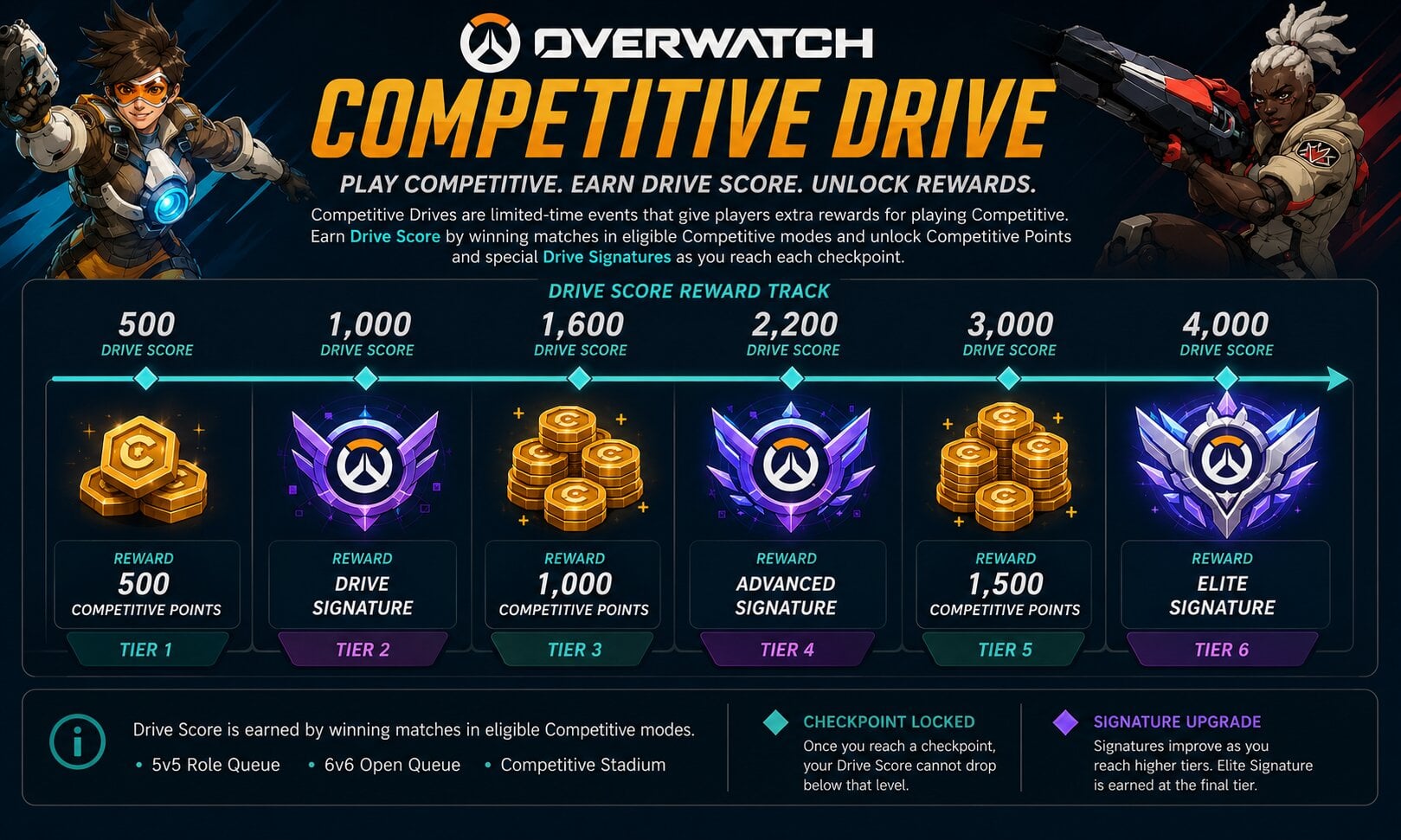
Competitive Drives use checkpoints to protect progress and distribute rewards. The standard reward structure alternates between Competitive Points and upgraded versions of the event's Drive Signature.Exact Drive Score requirements can change. A recent six-checkpoint track used this structure:
| Drive Score | Reward |
|---|---|
| 500 | 500 Competitive Points |
| 1,000 | Drive Signature |
| 1,600 | 1,000 Competitive Points |
| 2,200 | Advanced Drive Signature |
| 3,000 | 1,500 Competitive Points |
| 4,000 | Elite Drive Signature |
That version of the reward track provided 3,000 Competitive Points in total and finished at 4,000 Drive Score with the Elite Signature.
Blizzard has changed Drive rewards before, including special Drives with larger Competitive Point totals. Use the active reward track as the final source whenever a new Drive begins.
How Many Wins Do You Need to Complete Competitive Drives?
There is no single permanent answer because Blizzard can change the Drive Score required per checkpoint and the amount earned per win.Using the recent 4,000-score track and recent win values as an example, the best-case paths looked like this:
| Method | Score Per Win | Minimum Wins |
|---|---|---|
| Core Competitive Solo | 210 | 20 wins |
| Core Competitive Grouped | 260 | 16 wins |
| Competitive Stadium Solo | 265 | 16 wins |
| Competitive Stadium Grouped | 315 | 13 wins |
These are best-case estimates with no losses. Most players need more matches because losses can remove Drive Score between protected checkpoints.
For example, 20 Core Competitive solo wins at 210 points would produce 4,200 Drive Score if every match were a victory. A mixed win-loss record takes longer because some of that progress is removed after losses.
Playing with a reliable group can help twice: grouped wins can award bonus Drive Score, and coordinated teammates may also improve your chances of winning consistently.
What Are Overwatch Drive Signatures?
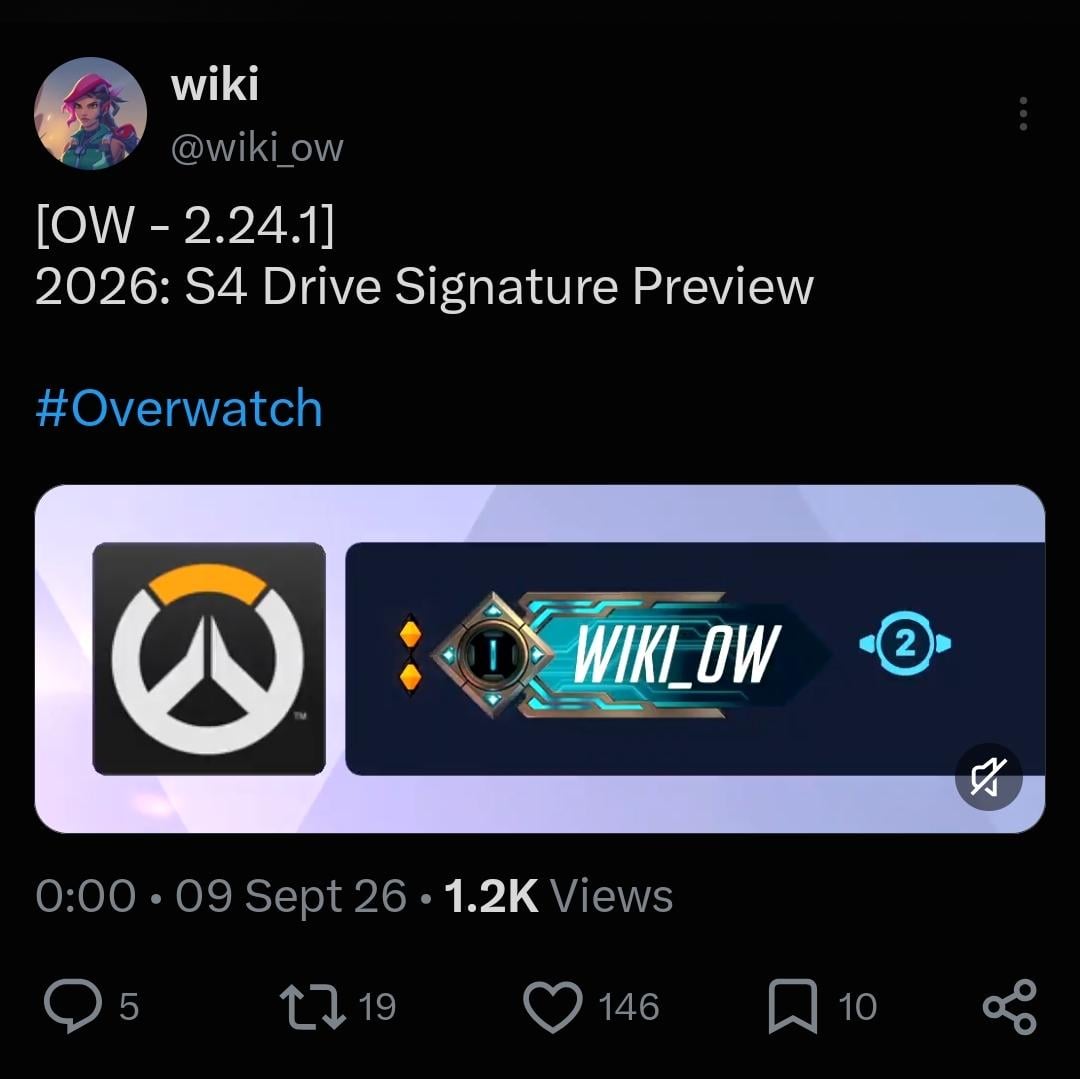
Drive Signatures are cosmetic decorations earned through Competitive Drives. They appear around your player name in several parts of the Overwatch interface and show that you progressed through a Drive.A typical Competitive Drive contains three Signature reward levels:
- Drive Signature: the basic version.
- Advanced Drive Signature: an upgraded version earned farther through the track.
- Elite Drive Signature: the highest version for fully completing the Signature progression.
The exact Drive Score requirement for each tier can change between events. On the recent 4,000-point track, those tiers were unlocked at 1,000, 2,200, and 4,000 Drive Score.
Each Competitive Drive can introduce a different visual Signature design.
Can You Select Old Drive Signatures?
Yes. Blizzard has announced support for selecting previously earned Drive Signatures. This changes the older system where the newest Drive appearance effectively replaced the one you had been displaying.The Signature selector applies to designs you previously earned. Under the announced system, you need to reach Checkpoint 4 in the active Competitive Drive before equipping a previously earned Signature. Blizzard can still adjust that requirement in a later season, so check the active Drive interface if the rule changes.
This also means earning a Signature has more long-term cosmetic value than it did under the original Drive system.
Why Do Players Have Different Drive Signatures?
Two players who completed a Competitive Drive can still have different-looking Signatures for several reasons.The most obvious difference is the Signature tier. A player who stopped after unlocking the basic Signature will have a simpler design than someone who reached the Advanced or Elite version.
You may also see lines, Roman numerals, circles, or Insignias around the Signature. These are connected to Drive prestige and track participation across multiple Competitive Drive events.
What Do the Roman Numerals on Overwatch Drive Signatures Mean?
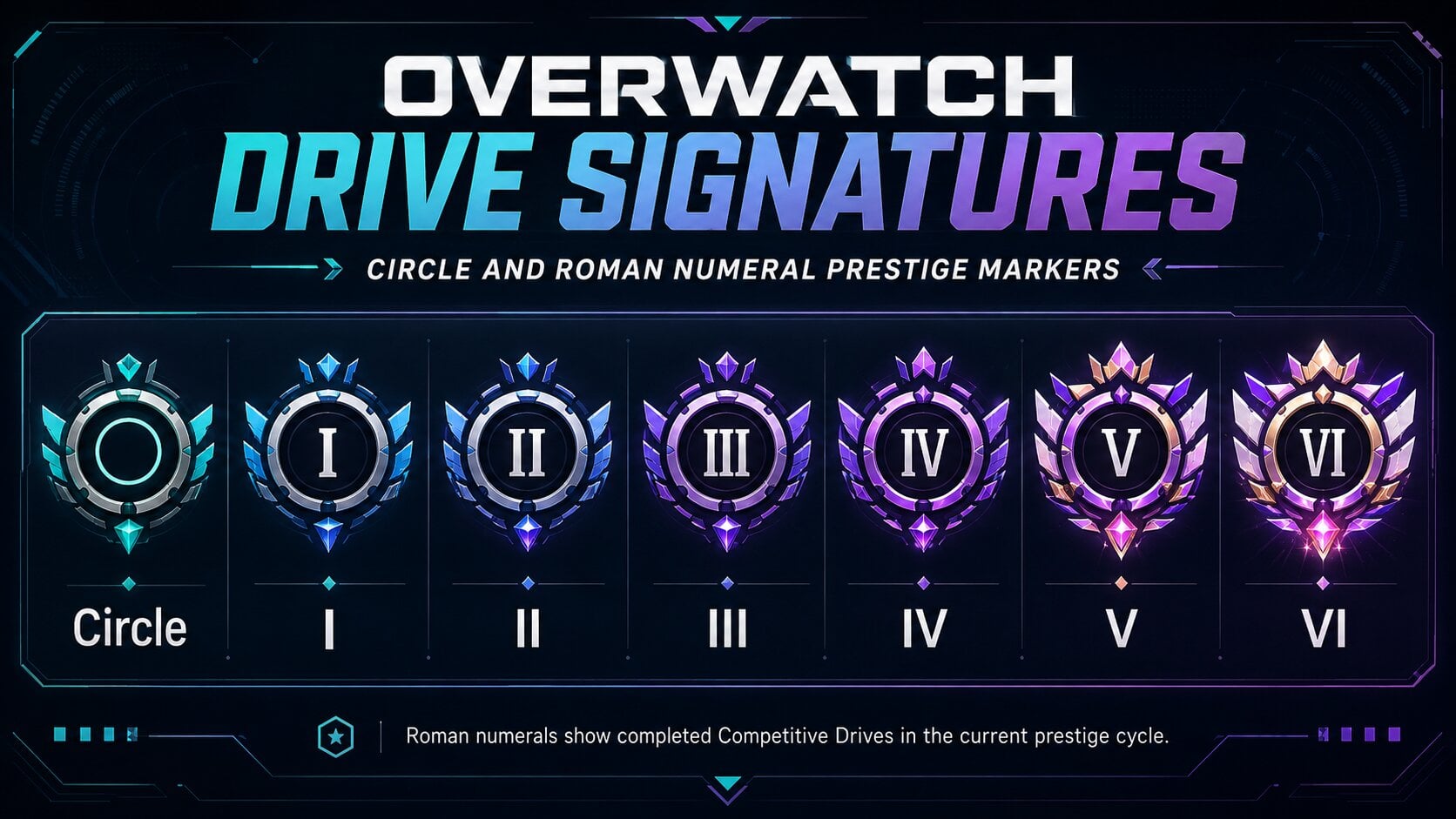
The lines inside a Drive Signature form Roman numerals. They represent Drive prestige and increase as you complete additional Competitive Drives.For example:
- I means one completed Drive in that prestige cycle.
- II means two completed Drives.
- III means three completed Drives.
- IV means four completed Drives.
- V means five completed Drives.
- VI means six completed Drives.
This is why one player's Signature may appear to contain only a circle while another has several lines inside it. The marks are not random cosmetic variations. They show accumulated Competitive Drive prestige.
You cannot repeatedly increase the numeral during the same Drive event. Prestige is built by completing separate Competitive Drives.
What Are Competitive Drive Insignias?
Roman numerals do not continue forever. Once a player completes a prestige cycle, Overwatch uses an additional Insignia to show further Drive completions.The Roman numeral progression goes up to VI. Completing the next Drive awards an Insignia and begins the Roman numeral count again from I.
For example, a player at VI can move to an Insignia plus I after another completed Drive. That combination represents more total Drive completions than VI without an Insignia.
Why Did My Drive Prestige Change After Team Drives?
Blizzard previously fixed a bug where Drive Signature prestige levels could change after Team Drives. If your Roman numeral or Insignia changed unexpectedly around an older Team Drive, it may have been caused by that bug rather than normal progression.The issue was marked as fixed in Blizzard's Overwatch patch notes. Team Drive progression and normal Competitive Drive prestige are separate systems.
Can You Complete Competitive Drives in Stadium?
Yes. Competitive Stadium became eligible for Competitive Drive progression starting with the Season 17 Drive changes.Stadium can use different Drive Score values from Core Competitive. In one recent Drive, a Stadium victory awarded 265 Drive Score compared with 210 for a Core Competitive win, while Stadium losses could also remove more progress.
If Stadium is included in the active Drive and you perform well there, it can be a fast route through the reward track.
Can You Complete Competitive Drives in Open Queue?
Recent Competitive Drives have included 6v6 Competitive Open Queue, but this was not always the case. Older Drives sometimes restricted progression to Role Queue.Because eligible modes can change, confirm that the Drive meter appears for your selected queue before relying on Open Queue for progression.
What Are Quick Play Drives?
Blizzard has announced that Drives are expanding to Quick Play. Quick Play Drives are designed as a separate progression track rather than simply turning normal Quick Play matches into the same Competitive Drive.Developer-stream details described the Quick Play version as a shorter, separate track that can run alongside Competitive Drives. The announced Quick Play rewards include Legacy Competitive Points, while the seasonal Drive Signature remains tied to the Competitive Drive track.
The important distinction is that Competitive Drives and Quick Play Drives are separate systems. Competitive Drives remain the ranked route for Drive Score, current Competitive Point rewards, and the seasonal Drive Signature, while Quick Play has its own progression and Legacy Competitive Point rewards.
Because Quick Play Drives are newer and Blizzard can tune their reward track separately, check the active event screen for exact Quick Play scoring and rewards.
Competitive Drives vs Quick Play Drives vs Team Drives
Overwatch now uses the word "Drive" for several related but different event formats. They should not be treated as the same progression system.| Feature | Competitive Drives | Quick Play Drives | Team Drives |
|---|---|---|---|
| Main Mode | Competitive | Quick Play | Competitive |
| Progress System | Drive Score | Separate Quick Play track | Fame |
| Main Progress Tiers | Checkpoints | Separate reward checkpoints | Gladiator Ranks |
| Main Cosmetic | Drive Signatures | Legacy Competitive Points; no Competitive Drive Signature | Player Card Frames |
| Group Mechanic | Grouped-win Drive Score bonus | Depends on the active Quick Play Drive rules | Keeping winning teammates together boosts Fame |
| Final Goal | Reach the final Drive checkpoint | Complete the Quick Play reward track | Reach and complete The Trial |
For the Fame-based version, see our full Overwatch Team Drives guide.
Tips for Completing Overwatch Competitive Drives Faster
Competitive Drives only stay active for a limited time, so efficient progression matters more than during normal ranked play.- Play with a reliable group: Recent Drives have awarded bonus Drive Score for grouped wins.
- Reach checkpoints early: Protected checkpoints stop later losses from removing all of your progress.
- Use Stadium if it suits you: When Stadium is eligible, it can offer strong Drive Score gains per win.
- Check the event rules first: Eligible modes, point values, and checkpoint requirements can change.
- Do not leave everything until the final hours: A losing streak can make the last checkpoint take much longer than the minimum-win estimate.
- Use your strongest heroes: Competitive Drives reward wins, so they are usually a poor time to learn an unfamiliar hero.
If your goal is the Elite Signature, plan around more matches than the theoretical minimum. A perfect win-only calculation is useful for estimating the grind, but most real Drive runs include losses.
OW Competitive Drives Boosting
Competitive Drives can become stressful because the reward track is only available for a short period and progress depends on winning eligible matches.If you do not have enough time to complete the event yourself, Boosting Factory offers an Overwatch Competitive Drives Boosting service to help you reach the Drive checkpoints and rewards you want.
You can choose the option that fits you best. A professional Overwatch player can complete the required progression on your account, or you can play together with an experienced player while working toward your Drive rewards.
Limited-Time Competitive Event
Complete Your Competitive Drive
Get help from experienced Overwatch players and reach the Drive Score you need for Competitive Points, Signatures, and full event completion.
View Overwatch Drives Boosting
Overwatch Competitive Drives FAQ
How do you earn Drive Score in Overwatch?
Modern Competitive Drives award Drive Score mainly for winning eligible Competitive matches. Blizzard moved away from the original system where Drive Score was calculated from Skill Rank percentage changes.The exact Drive Score earned per win can change between events, and grouped wins can receive a bonus.
Do you lose Drive Score after losing?
Yes. Losses can remove Drive Score after the first protected checkpoint. Completed checkpoints act as floors, so you cannot fall below one you have already reached.The exact loss penalty can change between Drives.
How much Drive Score do you need to finish Competitive Drives?
A recent Competitive Drive used a 4,000 Drive Score full-completion target, but Blizzard can adjust checkpoint requirements between events.Always use the active Drive screen for the exact target.
How many Competitive Points do you get from Competitive Drives?
A standard recent Competitive Drive track awarded 3,000 Competitive Points in total across three checkpoints. Blizzard has also run special Drives with different totals, so this is not guaranteed for every event.What do the lines on Overwatch Drive Signatures mean?
The lines form Roman numerals that represent Drive prestige. I represents one completed Drive in the current prestige cycle, II represents two, and the progression continues through VI.Why does my Drive Signature have a circle?
The circle is part of the prestige display area. Roman numeral lines and later Insignias are added there to show accumulated Competitive Drive completions.Why did my Overwatch Drive go from VI back to I?
After completing the prestige cycle through VI, Overwatch can award an Insignia and restart the Roman numeral count from I.An Insignia plus I therefore represents more total Drive completions than a standard VI Signature.
Can you complete Competitive Drives in Stadium?
Yes. Competitive Stadium can contribute to Drive progression when it is included in the active event. Stadium became an official Drive route with the Season 17 changes.Does Open Queue count for Competitive Drives?
Recent Drives have allowed progression through 6v6 Competitive Open Queue, but older versions did not always include it. Check the active Drive screen because eligible queues can change.Are Drives available in Quick Play?
Yes. Blizzard has announced Quick Play Drives as a separate Drive-style progression track for Quick Play players.Quick Play Drives should not be confused with the regular Competitive Drive track. Developer-stream details described Quick Play Drives as a separate shorter track that rewards Legacy Competitive Points and does not award the seasonal Competitive Drive Signature.
Are Team Drives the same as Competitive Drives?
No. Competitive Drives use Drive Score and checkpoints. Team Drives use Fame, Gladiator Ranks, team-based progression bonuses, Player Card Frames, and a final stage called The Trial.Can you complete a Competitive Drive more than once?
No. You cannot repeatedly finish the same Drive to keep increasing your prestige numeral. Drive prestige is built across separate Competitive Drive events.Can you choose an old Drive Signature?
Yes, if you previously earned it. Blizzard has announced a Signature selection system that lets players display previously earned Drive Signature designs instead of being limited to only the newest one.Under the announced selector system, you need to reach Checkpoint 4 in the active Competitive Drive before equipping a previously earned Signature. Check the event interface in case Blizzard changes that requirement later.
Do Drive Signatures stay forever?
Previously earned Drive Signatures can now be kept as selectable cosmetics under the newer Signature system. This is a major change from the original version of Drives, where Signatures were more temporary and tied to the current prestige cycle.Can you earn old Drive Signatures you missed?
The Signature selector is designed around previously earned Signatures. Do not assume an old Signature is automatically granted if you never unlocked it during its original Drive unless Blizzard specifically makes that design available again.Why did my Drive Signature prestige change after Team Drives?
Blizzard fixed a bug that could incorrectly change normal Drive Signature prestige levels after Team Drives. Team Drive progression should not normally alter your Competitive Drive Roman numeral or Insignia.

Top 25
Get the rank you deserve, today.